
When you buy through links on our articles, Future and its syndication partners may earn a commission.

Astronomers have observed a strange but powerful supernova explosion that not only marked the death of a massive, highly evolved star, but also may have heralded the birth of a pair of binary black holes.
The team behind this discovery studied the supernova explosion SN 2022esa with the 8.2-meter Subaru telescope located at the Mauna Kea Observatory in Hawaii and the Seimei telescope in Japan.
They found the supernova was likely the result of the explosive death of a massive, hot, luminous star at the end of its evolutionary development, known as a "Wolf-Rayet star." This star dwelled in the galaxy 2MFGC 13525, located around 320 million light-years away from Earth.
The scientists discovered that SN the supernova demonstrated a clear and stable period lasting around a month, which led them to theorize that it was the result of periodic eruptions in this system, one each Earth-year before the final explosion.
That kind of stable periodicity is only possible in a binary system, the researchers say, indicating this doomed Wolf-Rayet star was partnered by either a black hole or a massive star that will one day explode to birth a black hole. The end result in both cases is a black hole binary.
"The fates of massive stars, the birth of a black hole, or even a black hole binary, are very important questions in astronomy," team leader Keiichi Maeda of Kyoto University said in a statement. "Our study provides a new direction to understand the whole evolutionary history of massive stars toward the formation of black hole binaries."
The team's findings don't just reveal more about binary black holes and their origins; they also demonstrate the power of teaming two different telescopes with different capabilities. The Seimei telescope brings flexibility and rapid response times to this tag-team, while Subaru provides its high-sensitivity.
As a result, these telescopes are likely to remain teamed for years to come.
"We expect many interesting discoveries on the nature of astronomical transients and explosions like supernova," Maeda said.
The team's research was published in November in Physical Review Letters.
LATEST POSTS
- 1
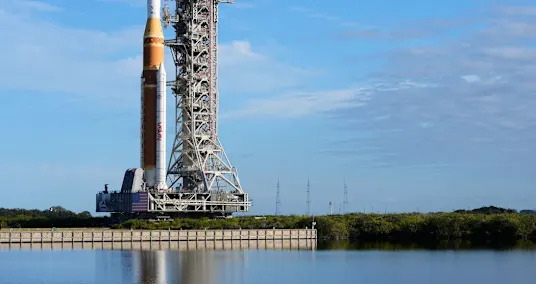
 NASA’s Artemis II mission will take an astronaut crew around the Moon – a space policy expert describes the long road to launch
 - 2I took my shoes off and went for a barefoot hike. I couldn’t believe what happened next
- 3Real time features for Films and Programs
- 4I work with companies to confront addiction in the workplace. The hidden crisis is costing corporate America millions.
- 5Europe's powerful Ariane 6 rocket launches Sentinel-1D Earth-observation satellite to orbit (video)


- Hilary Duff's husband responds to Ashley Tisdale's 'toxic' mom group claims: The drama, explained
- A definitive Manual for Internet Mastering and Expertise Improvement
- BravoCon 2025: How to watch, full schedule and lineup, where to stream free and more
- 6 Exceptionally Appraised Summer Travel Objections
- Venice’s newest marvel is a wild, acrobatic dolphin. His refusal to leave puts him in danger
- Dramatic Dominance d: A Survey of \Feelings in front of an audience\ Theater Play
- Putting resources into Yourself: Self-awareness Techniques
- Luigi Mangione‘s lawyers say Bondi’s death penalty decision was tainted by conflict of interest
- Vote In favor of Your Number one Sort Of Blossoms


