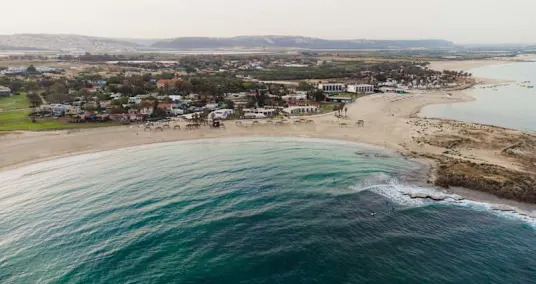
The discovery was made in an ancient shipwreck in the Dor Lagoon near the Carmel Coast, where archaeologists recovered nine pieces of unprocessed iron known as “blooms.”
Researchers from the University of Haifa said Wednesday that an underwater excavation off Israel’s northern Mediterranean coast uncovered what they described as the earliest known cargo of raw iron transported by ship, dating back around 2,600 years, Xinhua reported.
The discovery was made in an ancient shipwreck in the Dor Lagoon near the Carmel Coast, where archaeologists recovered nine pieces of unprocessed iron known as “blooms.” According to the university, the find provides direct evidence of how iron was transported in its earliest commercial stages.
The material was preserved in its original form, having solidified directly in a smelting furnace without undergoing forging or further refinement. Researchers said this distinguishes the cargo from later iron artifacts that typically show signs of shaping or tool-making.
Unlike copper and bronze, which could be melted into liquid form in ancient production processes, iron was heated with charcoal to produce a solid, porous mass. That mass was generally hammered to remove impurities and create denser material suitable for tools and implements.
The recovered blooms showed no indication of that secondary processing stage, suggesting they were transported immediately after production.

Earliest iron shipment discovered in ancient Mediterranean wreck
To determine the age and condition of the cargo, researchers conducted microscopic and chemical analyses.
Radiocarbon dating was also carried out on charred wood embedded in one of the pieces, helping confirm the timeline of the shipment. The findings were published in the journal Heritage Science.
Researchers said the cargo indicates that iron was being moved in raw form from production sites to other locations for further processing, pointing to a level of specialization in ancient manufacturing and trade networks in the Mediterranean.
The University of Haifa said the discovery provides new insight into early iron production and distribution practices in the region.
LATEST POSTS
- 1
 EU states agree first step for Ukraine reparations fund
 - 2Pick Your #1 Kind Of Treat
- 3New funding transforms lives by expanding electricity access across Africa
- 4FDA claims on COVID-19 vaccine safety are unsupported by reliable data – and could severely hinder vaccine access
- 5As tetanus vaccination rates decline, doctors worry about rising case numbers





- The 12 biggest space stories of 2025 — according to you
- Drones, physics and rats: Studies show how the people of Rapa Nui made and moved the giant statues – and what caused the island’s deforestation
- ACA subsidies latest: Making sense of what's happening with health care after Republicans revolt, forcing a vote on funding extension
- New trailer for 'Bridgerton' Season 4 teases Benedict's love story: Watch it here
- Top notch Feasting: A Manual for Worldwide Acclaimed Eateries
- China and Pakistan issue five-point peace plan for Middle East
- Artemis 2 astronauts see Earth in the rear-view mirror | Space photo of the day for April 3, 2026
- Vote In favor of Your Favored Web based Dating Application
- Robert Pattinson claims he's a pathological liar. What 'The Drama' star has said about his 'shtick'